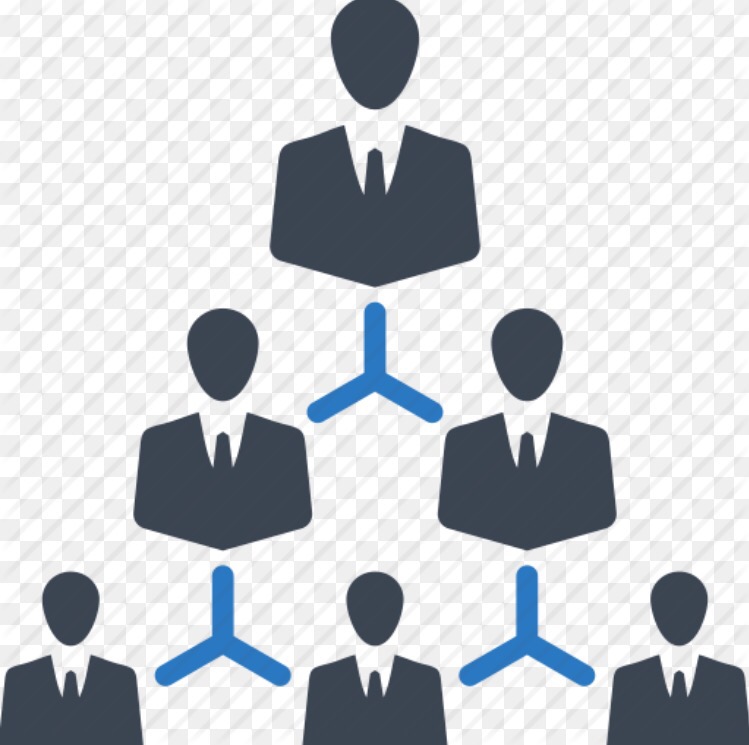
You Really Expect Me To Behave… LIKE THAT?

How We Behave vs. How We Pretend to Behave

(The content of this post comes mostly from first-hand observations in companies and churches and the teachings of Patrick Lencioni. Leaders communicate how they want followers to behave subconsciously.

Written organizational values are a dime a dozen. Many ignore these values as touchy-feely HR talk, because they observe leadership ignore said values with their behavior.


I notice there really are two different value systems in most organizations.  There are the written values or vision statements that all are to aspire to but there are also behavioral values.


Behavioral values determine what is acceptable behavior within an organization. Behavioral values are established by two things. One, how leadership behaves; and two, how the employees who are heavily promoted or rewarded behave.


Don’t get me wrong, heavily promoted employees often deserve their promotions, they perform well, they fit in the culture well. They may be very loyal to leadership, they may navigate the politics well and they may be very productive.


But what leaders sometimes ignore is the other behaviors that they promote when they promote certain people. I could give many examples and it seems for every business example I have an equal church example. I’ve seen similar trends in a variety of types of organizations. So I think that these challenges are common to all hierarchical organizations.

“Behave Like This Guy”

When a leader awards or promotes a high performer they are also inadvertently promoting and encouraging their behavior. Their other behaviors, which may be hidden from the leader, can result in a toxic work culture over time. High performers sometimes don’t work well with others, high performers are sometimes very competitive. They may be liars, they may be hypocritical and hostile to the company goals overall while meeting their personal career objectives.

Most heavily promoted employees directly or indirectly generate revenue for a company but treat their colleagues poorly. They may steal ideas and use their influence for personal advantage at the expense of lower employees. I’ve thought to myself more than once after seeing a promotion or award given to certain (not all) colleagues:

“You really expect me to behave…. like that?”


I believe that the behavioral values of a leader and their ‘promotees’ have more of an influence on a culture than any other single thing. The truth is, most leaders I have encountered do not care to try to manage culture. They think it is a nebulous result of things they have little control over. I am convinced that this is a failure in leadership. It is a business mistake that has a direct impact on financial performance.


Leaders who say one thing and promote another cause resentment and cause a company’s culture to decay. What an organization needs is clarity at the top, clarity of vision, clarity of behavioral norms.


What is needed is strong ownership of a company’s culture at the very top. Organizational values should be formulated, communicated and enforced by senior leaders. Don’t delegate this to HR or lower layers of managers, if so, it will be a culture in perpetual flux. Over time the worst behavior will dominate and become reinforced. Sort of like a survival of the fittest (or fiercest) culture.

Delegation of behavioral values to HR is a bad idea because employees look to leadership for behavior guidance, not HR. Behavior determines culture which has a huge impact on financial performance long-term. Trying to manage financial performance while ignoring culture is a mistake.

The following three culture principles, if embraced by its leaders, can begin to repair any hierarchy based organization. From high-tech companies, to building contractors, to even hierarchy-based churches.

  1. Communicate and reward people for the behavior you want, not those you feel morally obligated to broadcast.
  2. Do not delegate communication of behavior values to lower managers or to HR, own it and back it up financially.
  3. MOST IMPORTANTLY: Use extreme caution when promoting and/or awarding people. Understand the message that rewards and promotions send.

If you liked this post you will like this: How Enablers Affect Company Culture
What other ways can leaders repair company culture?

enablers

How Enablers Affect Organizational Culture

Watch Out for the Enablers

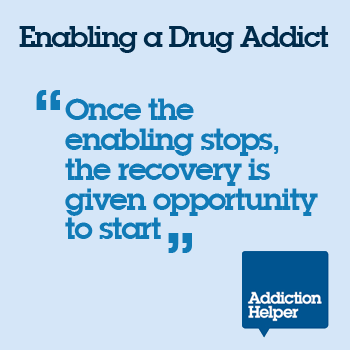
Enablers are people who enable or help others to engage in dysfunctional or destructive behavior. Enablers make bad behavior easier and more comfortable to engage in.

‘Enabling’ is a term often used in the context of a relationship with an addict. It might be a drug addict or alcoholic, a gambler, or a compulsive over-eater or even a bi-polar or schizophrenic individual. Enablers, rather than addicts, suffer the effects of the addict’s behavior. Enabling is removing the natural consequences to the addict of his or her behavior.” Psychcentral.com post by Darlene Lancer

Recently someone made it clear to me that she was being an enabler. She essentially protected a person from incarceration with no consequences to their actions.

This prompted me to research enabling from a mental health perspective. I learned that the majority of addicts have at least one enabler in their life. Enablers shield a person from the consequences of their behavior protecting them from the natural consequences.

Antonym of Enabler

In a word the antonym of enabler is a disciplinarian. To prepare those we lead by making artificial consequences which results in changes of behavior.

Good parenting, does the opposite of enabling, a loving parent creates artificial consequences to a child’s bad behavior. Particularly to those actions which are likely to bring future negative consequences in adulthood. Healthy parents provide consequences to prepare children to function in society on their own. This is otherwise known as discipline; of course punishment can be taken too far and can become abusive. But a loving parent provides discipline to a child, it would be unkind for them not to.

Enabling and Organizational Culture?

I find the difference between the behavior of start-up business employees and employees in large corporations fascinating.

  • When an employee is heavily promoted despite behavior that would cause loss of business in an open market. They might be experiencing enabling.
  • When a lazy or unproductive employee is not made to show up and work hard every day. They might be experiencing enabling.
  • When unions save the job of negligent or toxic employees in knee-jerk reactions against management, they might be enablers.

Hard work beats talent when talent doesn’t work hard. – Vala Afshar (@ValaAfshar)

Talent is a skill and is recruited in technology corporations typically based on education. But, hard work is a behavioral issue and is subject to personal will-power. Enablers notoriously overlook bad behavior and even can promote it. Teams of highly talented and educated employees can become very ineffective through a culture that enables bad behavior. This type of corporate culture is often created over years of enabling. Enabling is a major mechanism which hinders the work of hundreds of talented employees.

When an entrepreneur pivots her strategy and creates products to serve her market the new sales themselves is the discipline. Unless the government is meddling, there is no enabler present in the market to shield her. She must pivot her strategy… or not eat.

Organizations do no favor to employees or their customers when they enable bad behavior internally. Enabling cripples people emotionally, over the long term it destroys self-esteem and enslaves people emotionally.

The Free Market Typically Has No (or less) Enablers

It has been said that pursuing entrepreneurship is the best personal development activity available. In creating a profitable business there is rarely artificial shields for the entrepreneur. The free market does not care who you are, (or who you’re not). The free market does not pay your bills because you are accustomed to getting handouts. Serving the free-market well requires hustle, it requires good ideas and it requires self-discipline. It is a survival of the fittest environment and it more closely mirrors reality.

Mental health and addiction professionals warn against enabling. Evidence has shown that an addict experiencing the damaging life-consequences of his addiction provides the most incentive to change. Often this is when the addict “hits bottom” – a term commonly referred to in Alcoholics Anonymous.

How to Help Enablers

Wise leaders give their people incentive to change and do not enable based on the arbitrary, it is bad for business and it is bad for people.

It seems to stop enabling a leader must start with the following:

  1. Accept the fact that we may be enabling bad behavior; the most difficult part of changing.
  2. Think what is best for the culture I am leading and pursue that for those we lead.
  3. Display courage to correct people when they need it (or at least don’t promote bad actors). Great people developers are willing to correct, willing to call a person out when they need to change their behavior.

How else can enabling impact culture?

For more on this topic check this out> You Really Expect Me to Behave … Like That?

Guest Innocentive Blog Post – 7 Key Features of Good Social Business Software

On December 18 2013 I submitted a guest post to the Innocentive blog.  This is my first guest blog post and I am proud to be published on such a great company like Innocentive.


InnoCentive is the global leader in crowd sourcing innovation problems to the world’s smartest people who compete to provide ideas and solutions to important business, social, policy, scientific, and technical challenges.  Solvers compete for reward money to solve some of the most difficult problems for companies who use the Innocentive crowd sourcing platform.


I am a solver and have already submitted one solution to a challenge and hope to solve others. Check out Innocentive here and consider becoming a solver with Innocentive, some of the challenges have rewards in the tens of thousands of dollars range.


Since I began podcasting I’ve not had the time to write blog posts, here is the text of this blog post:

Social enterprise software is exploding right now and expected to continue to increase.  Companies are starting to understand the power and potential impact that a social network can have on employee productivity.  From accelerating day-to-day operations to driving great ideas into a profitable business, social entrepreneurs are creating amazing software products.  While studying dozens of this social networking software I think that there are at least 7 features of good social-business software:

  1. It is secure, unlike Facebook and twitter the content that will be discussed in most companies must remain private to the company, from IP to business strategies a corporate social network must have the strictest security or employees simply will not use it.  This brings up the debate of ‘in the cloud’ vs. on company servers security. Some say that cloud security is now more secure than company servers; we will see how this plays out but unlike other social media security for content is uniquely important for social enterprise networks.
  2. It has a company-wide news feed, this is the location for every post is streamed for all to see.  Anews feed is important because it will bring many employees back to the network to read what their colleagues are discussing.
  3. It gives the user the ability to post private messages, some communication should be kept private and a social network should not eliminate that feature of email.
  4. It should provide users with a profile page such as a mini-LinkedIn to show case skills, back-ground and/ or brag about expertise
  5. It should give the users the ability to create communities and groups.
    1. Each company can decide to manage communities or allow employees to create communities spontaneously.
  6. It should provide users with project management features such as the ability to:
    1. Create a private community for project team members
    2. Assign tasks to team members
    3. Share files with team members
    4. Create a team calendar
    5. Enable private, team/ invite only conversations
  7. It has the ability to track analytics and insights, network managers need insight into the conversations happening on the network…analytics can tell you:
    1. what are people talking about
    2. how people are using the network
    3. how are problems getting resolved
    4. who is influential

BONUS feature: A great social business network is customizable for specific organizations.  Large organizations in particular can benefit from the ability to customize a platform; a company may need to hire a programmer to customize.  Some software products have customizable features as a up-sell option.  For example, a technology innovation or R&D focused company may choose a customizable innovation-centered social network that not only increases connections between employees but it also helps employees to innovate more effectively and at a faster pace.

Finding a great social enterprise network with all the features that you need is one thing but there will likely be road blocks to implementation that we must be aware of.  The largest roadblock I think is employee detractors, some employees will be opposed to going social within a company and the truth is we should understand their reasons and motives rather than just overruling them.  I think there are at least four types of employee reactions to the prospect of adding social enterprise network at work. These reactions are advocates, users, agnostics and detractors.

Understanding the motivations of your detractors is an important key for successfully rolling out a social network. The extent of detractors and their motivations may be better understood by analyzing your company’s culture.  Culture can have a huge impact on the efficiency of any organization.  A company may have very intelligent employees but if the culture is toxic and unhealthy that intelligence will sit dormant.  I think that there are cultural prerequisites that must be in place before during the installation of a social enterprise network. It is shocking how many leaders ignore the cultural factors when trying to grow their company.  I view culture an equally important factor in implementing a social enterprise platform as it is to general company growth.

Three cultural requirements for enjoying an impactful social enterprise network within a company:

  1. We must have collaborative and confident employees; insecure and un-trusting team members can increase destructive knowledge silos throughout an organization.
  2. Freedom from hyper-political competitiveness, only strong healthy leadership can bring this about. Unfortunately some leaders purposely pit employees against one another in hopes that competition will improve overall performance, there may be some merit to this strategy but a line must be drawn beyond which the leader pulls everyone back. Competitiveness can easily be taken too far by employees.
  3. There are minimal detractors/ resistors to a social network.

To counter the detractors we should first understand the reasons that people detract, there are legitimate and understandable reasons that some people detract from a social network.  Some are just anti-social and the openness feels like a threat, others “throw the baby (social collaboration) out with bath water” (Facebook narcissism they’ve seen at home).

Others detract because of a general lack of trust in the culture amongst employees. Patrick Lencioni has a lot to say about trust: “there is predictive based trust (this is seen when our friends know and can predict how we will react to us) and there is vulnerability based trust, this is where we can say freely to colleagues, ‘I don’t know the answer’, ‘I think I made a mistake’, ‘I am sorry I was out of line’) this vulnerability creates a powerful bond of trust within teams.

Lay a strong foundation for your social enterprise network by working on your culture before or during implementation of your network, this will improve your company’s performance and enable your social network to impact your company to a much greater degree.


Stay Up To Date With Email

​-

I use & recommend Bluehost, buy your domain and hosting here!

Get Adam’s From His Side Book Here! Its about Church Transformaton from Institutional Church to Living Ecclesia

Visitors

  • 55,544 hits

Connect on Twitter

en_USEnglish